What Is Ovulation Induction?
Ovulation induction (OI) is a fertility treatment that uses medications to stimulate your ovaries to produce and release eggs. In a normal menstrual cycle, your brain sends hormonal signals that cause one egg to mature and be released from your ovary — a process called ovulation. However, some people do not ovulate regularly or at all, making it difficult or impossible to conceive naturally.
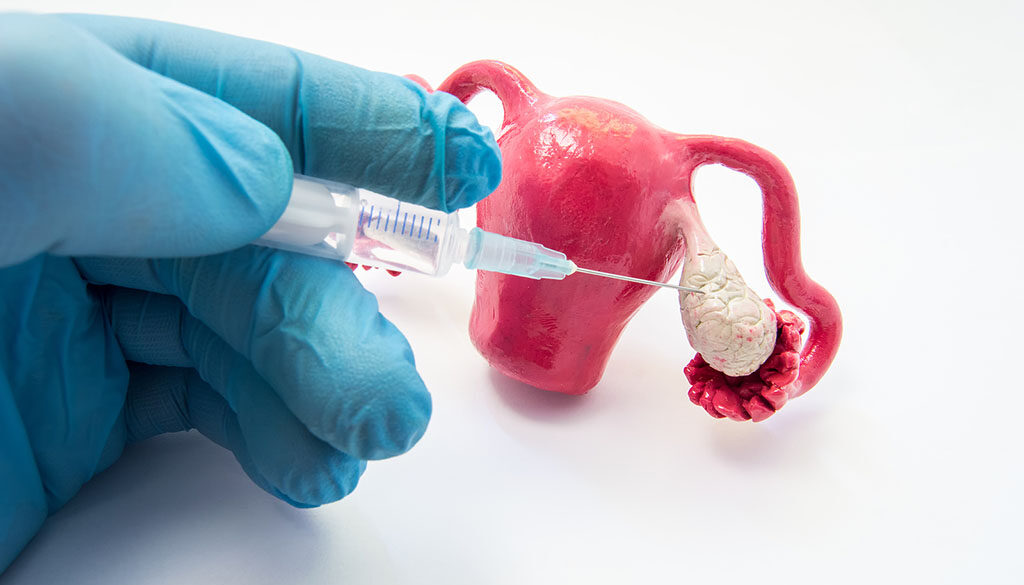
Ovulation induction works by using oral or injectable medications to trigger your body's natural hormonal pathways, encouraging your ovaries to develop one or more mature follicles (the fluid-filled sacs that contain eggs). Once the follicles are mature, ovulation is triggered either naturally or with a hormone injection, and you can try to conceive through timed intercourse or intrauterine insemination (IUI).
It is one of the simplest and most commonly used fertility treatments and is often the first step in a couple's fertility journey before considering more advanced procedures like IVF.
Why Is Ovulation Induction Done?
Ovulation induction is primarily used to help people who have difficulty conceiving due to irregular or absent ovulation. Your healthcare provider may recommend ovulation induction if you have any of the following conditions:
- Polycystic ovary syndrome (PCOS) — The most common cause of anovulation (lack of ovulation). PCOS causes hormonal imbalances that prevent eggs from maturing and being released regularly.
- Hypothalamic amenorrhea — A condition where the hypothalamus in your brain does not send proper signals to trigger ovulation, often related to stress, excessive exercise, or low body weight.
- Unexplained infertility — When no specific cause of infertility is identified, ovulation induction combined with timed intercourse or IUI may improve your chances.
- Irregular menstrual cycles — If your periods are unpredictable, ovulation induction can help regulate egg development and make the timing of conception more precise.
- Luteal phase defect — When the second half of your menstrual cycle is too short or your progesterone levels are too low to support implantation.
- Mild endometriosis — In early-stage endometriosis where the fallopian tubes are still open, ovulation induction may be used alongside IUI.
- As part of IUI or IVF preparation — Ovulation induction is frequently used as a component of other fertility treatments to optimize the number and timing of egg release.
Medications Used in Ovulation Induction
Several types of medications can be used to induce ovulation. Your healthcare provider will choose the best option based on your diagnosis, age, medical history, and how your body responds to treatment. The three most commonly used categories of ovulation induction medications are described below.
Clomiphene Citrate (Clomid)
Clomiphene citrate, commonly known by the brand name Clomid, is one of the oldest and most widely used fertility medications. It is taken as an oral tablet, typically for five days early in your menstrual cycle (usually days 3 through 7 or days 5 through 9).
- Clomid works by blocking estrogen receptors in your brain, which tricks your body into thinking estrogen levels are low. This causes your pituitary gland to produce more follicle-stimulating hormone (FSH) and luteinizing hormone (LH), stimulating your ovaries to develop follicles.
- It is most effective for people with PCOS or other conditions where the body produces estrogen but does not ovulate regularly.
- About 80% of people who take Clomid will ovulate, and approximately 40-45% will become pregnant within six cycles.
- Common side effects include hot flashes, headaches, mood swings, breast tenderness, bloating, and occasionally visual disturbances.
- Clomid is generally not used for more than six cycles, as most pregnancies occur within the first three to four cycles.
- There is approximately a 5-10% chance of twins with Clomid. Higher-order multiples (triplets or more) are rare.
Letrozole (Femara)
Letrozole, sold under the brand name Femara, is an aromatase inhibitor originally developed for breast cancer treatment. It has become a first-line fertility medication, particularly for people with PCOS.
- Letrozole works by temporarily lowering estrogen levels in your body. This signals your brain to increase FSH production, which stimulates your ovaries to develop follicles.
- It is taken as an oral tablet for five days, usually starting on cycle day 3 through 7.
- Studies have shown that Letrozole may result in higher ovulation and pregnancy rates than Clomid in people with PCOS, making it the preferred first-line treatment in many clinics.
- Letrozole tends to produce fewer side effects than Clomid and has a lower risk of multiple pregnancies because it typically stimulates the development of just one follicle.
- Common side effects include fatigue, dizziness, headache, and hot flashes, though these are generally mild.
- Unlike Clomid, Letrozole does not have a negative effect on the uterine lining (endometrium), which can be beneficial for implantation.
Gonadotropins (Injectable Hormones)
Gonadotropins are injectable fertility medications that contain FSH, LH, or a combination of both. They are used when oral medications have not been successful or when a stronger ovarian response is needed.
- Common gonadotropin medications include Gonal-F, Follistim (containing FSH), and Menopur (containing both FSH and LH).
- These medications are given as daily injections, usually starting early in your menstrual cycle and continuing for 7 to 14 days.
- Gonadotropins directly stimulate your ovaries, bypassing the brain's hormonal signaling pathway. This makes them more powerful but also requires closer monitoring.
- Because gonadotropins can cause multiple follicles to develop, there is a higher risk of multiple pregnancies (15-20% chance of twins) and ovarian hyperstimulation syndrome (OHSS).
- Regular blood tests and ultrasound monitoring are essential during gonadotropin treatment to track follicle development and adjust medication dosing.
- Once follicles reach the appropriate size (usually 18-22 mm), a trigger injection of human chorionic gonadotropin (hCG) or a GnRH agonist is given to induce final egg maturation and ovulation.
- Gonadotropins are more expensive than oral medications and require more frequent clinic visits for monitoring.
The Ovulation Induction Process and Monitoring
Ovulation induction follows a carefully timed process that aligns with your menstrual cycle. Your healthcare provider will monitor you throughout the process to ensure the treatment is working safely and effectively.
Initial Assessment
Before starting ovulation induction, your healthcare provider will perform a thorough evaluation. This typically includes blood tests to check hormone levels (FSH, LH, estradiol, thyroid hormones, prolactin, and AMH), an ultrasound to assess your ovaries and uterine lining, and a review of your partner's semen analysis. Your provider will also confirm that at least one fallopian tube is open using a hysterosalpingogram (HSG) or similar test.
Starting Medication
Oral medications like Clomid or Letrozole are typically started on day 2, 3, or 5 of your menstrual cycle and taken for five consecutive days. Injectable gonadotropins may be started on day 2 or 3 and continued for a variable number of days depending on your response.
Monitoring
During your treatment cycle, you will have regular monitoring appointments that include transvaginal ultrasounds to measure follicle growth and blood tests to check estradiol (estrogen) levels. For oral medications, monitoring may involve one or two visits. For gonadotropins, you may need visits every one to three days.
Trigger and Ovulation
When one or more follicles reach mature size (approximately 18-22 mm), your provider may administer a trigger injection of hCG to prompt ovulation. Ovulation typically occurs 36 to 40 hours after the trigger injection. Some cycles may rely on your natural LH surge instead.
Timed Intercourse or IUI
After the trigger injection, your provider will advise you on the optimal timing for intercourse, or you may undergo an IUI procedure. Intercourse is typically recommended on the day of the trigger and the following day. If IUI is planned, it is usually performed 24 to 36 hours after the trigger.
Luteal Phase Support
After ovulation, your provider may prescribe progesterone supplements (oral, vaginal, or injectable) to support the uterine lining and improve the chances of implantation. You will take a pregnancy test approximately two weeks after ovulation.
What to Expect During Ovulation Induction
Ovulation induction is generally well tolerated, and most people are able to continue their daily activities throughout treatment. Here is what you can expect:
- Oral medications are easy to take and are usually well tolerated. You may experience mild side effects such as hot flashes, headaches, or mood changes.
- If you are using injectable medications, your healthcare team will teach you how to give yourself the injections at home. The needles are small, and most people find the process manageable after the first few days.
- You will need to attend monitoring appointments at your clinic, which may require some schedule flexibility. Appointments are usually brief, lasting about 15 to 30 minutes.
- You may feel mild bloating, pelvic pressure, or breast tenderness as your follicles grow. This is normal and usually resolves after ovulation.
- The two-week wait between ovulation and your pregnancy test can be emotionally challenging. It is completely normal to feel anxious during this time.
- If the cycle is not successful, your provider will discuss adjustments for the next cycle, such as changing the medication dose or switching to a different medication.
It is important to attend all monitoring appointments and follow your medication schedule closely. If you experience significant discomfort, bloating, or other concerning symptoms, contact your healthcare provider right away.
Success Rates of Ovulation Induction
The success of ovulation induction depends on several factors, including your age, the underlying cause of infertility, the medication used, and whether the treatment is combined with IUI.
- For people with PCOS using Letrozole, ovulation rates are approximately 60-80%, with pregnancy rates of about 20-25% per cycle.
- Clomid results in ovulation in approximately 80% of people with ovulatory disorders, with per-cycle pregnancy rates of about 10-15%.
- Gonadotropin therapy combined with IUI can achieve pregnancy rates of 15-25% per cycle, depending on age and diagnosis.
- Age is the most significant factor affecting success. People under 35 tend to have the highest success rates, while rates decline progressively after 35 and more sharply after 40.
- Most pregnancies from ovulation induction occur within the first three to four treatment cycles. If pregnancy has not occurred after four to six cycles, your provider may recommend moving to IVF.
- Combining ovulation induction with IUI generally improves success rates compared to timed intercourse alone.
Your healthcare provider at Fishtail IVF will discuss realistic expectations based on your individual circumstances and help you understand when it may be appropriate to consider other treatment options.
Risks and Side Effects of Ovulation Induction
Ovulation induction is generally safe, but like all medical treatments, it carries some risks. Your healthcare provider will monitor you carefully to minimize these risks.
Ovarian Hyperstimulation Syndrome (OHSS)
OHSS occurs when the ovaries respond too strongly to fertility medication, becoming swollen and painful. Mild OHSS is relatively common and causes bloating, mild abdominal discomfort, and nausea. Severe OHSS is rare but can be serious.
- Mild OHSS symptoms include bloating, nausea, mild abdominal pain, and slight weight gain. These usually resolve on their own within a few days.
- Severe OHSS can cause rapid weight gain, severe abdominal pain, vomiting, difficulty breathing, and decreased urination. This requires immediate medical attention.
- OHSS is more common with gonadotropin injections than with oral medications like Clomid or Letrozole.
- Your healthcare provider monitors follicle development closely and may cancel or modify a cycle if too many follicles develop, reducing the risk of OHSS.
- People with PCOS are at a higher risk for OHSS due to the large number of small follicles typically present in their ovaries.
Multiple Pregnancies
One of the most significant risks of ovulation induction is the possibility of a multiple pregnancy (twins, triplets, or more). This occurs because fertility medications can cause more than one egg to be released.
- With oral medications, the risk of twins is about 5-10%, and higher-order multiples (triplets or more) are uncommon.
- With gonadotropin injections, the risk of multiples is higher, approximately 15-20% for twins, with a small risk of higher-order multiples.
- Multiple pregnancies carry increased risks for both the mother and babies, including preterm birth, low birth weight, gestational diabetes, preeclampsia, and the need for cesarean delivery.
- Your provider may cancel a cycle if ultrasound shows that too many follicles have developed, to reduce the risk of high-order multiples.
Other Risks and Side Effects
- Mood changes, including irritability and emotional sensitivity, particularly with Clomid.
- Hot flashes, headaches, and breast tenderness from oral medications.
- Injection site reactions (redness, swelling, or bruising) with gonadotropins.
- Ovarian cysts, which are usually harmless and resolve on their own.
- Ectopic pregnancy (pregnancy outside the uterus), which is a small but possible risk with any fertility treatment.
- Ovarian torsion (twisting of the ovary) is very rare but can occur if the ovaries become significantly enlarged.
Who Is a Candidate for Ovulation Induction?
Ovulation induction may be right for you if you meet certain criteria. Your healthcare provider at Fishtail IVF will evaluate your individual situation to determine if this treatment is appropriate.
- You have been diagnosed with an ovulatory disorder such as PCOS, hypothalamic amenorrhea, or irregular ovulation.
- You have unexplained infertility and want to try a less invasive treatment before considering IVF.
- You have at least one open (patent) fallopian tube, confirmed by a hysterosalpingogram or similar test.
- Your partner has a normal or mildly abnormal semen analysis. If there are significant sperm issues, IVF with ICSI may be more appropriate.
- You are in generally good health and do not have conditions that would make pregnancy unsafe.
- You are willing and able to attend regular monitoring appointments during your treatment cycle.
Ovulation induction may not be recommended if you have blocked fallopian tubes, severe endometriosis, significantly diminished ovarian reserve, or severe male factor infertility. In these cases, IVF or other treatments may offer better results.
Ovulation Induction vs. IVF
Ovulation induction and IVF are both fertility treatments, but they differ significantly in complexity, cost, and approach. Understanding the differences can help you and your provider choose the best path forward.
- Ovulation induction stimulates your ovaries to release one or a few eggs, and conception occurs inside your body through intercourse or IUI. IVF involves stimulating the ovaries to produce many eggs, retrieving them surgically, fertilizing them in a laboratory, and transferring an embryo back into your uterus.
- Ovulation induction is less invasive, less expensive, and requires fewer clinic visits than IVF.
- IVF generally has higher per-cycle success rates (40-50% for people under 35) compared to ovulation induction (15-25% per cycle).
- Ovulation induction is typically tried first for people with ovulatory disorders or unexplained infertility, especially those under 35.
- If ovulation induction has not been successful after four to six cycles, or if there are additional factors such as blocked tubes or severe male factor infertility, your provider may recommend moving to IVF.
- Your healthcare provider at Fishtail IVF will help you weigh the benefits and limitations of each approach based on your age, diagnosis, and personal preferences.
When Should You Contact Your Healthcare Provider?
While ovulation induction is generally safe, it is important to be aware of symptoms that require prompt medical attention. Contact your healthcare provider or visit the clinic immediately if you experience any of the following:
- Severe or worsening abdominal or pelvic pain
- Significant abdominal bloating or rapid weight gain (more than 1 kg per day)
- Nausea, vomiting, or diarrhea that does not improve
- Difficulty breathing or shortness of breath
- Decreased urination or dark-colored urine
- Dizziness, fainting, or lightheadedness
- Heavy vaginal bleeding (more than a normal period)
- Signs of infection such as fever or chills
These symptoms could indicate ovarian hyperstimulation syndrome or other complications that need prompt evaluation and treatment. Early intervention leads to better outcomes, so do not hesitate to reach out to your care team.
A Note from Fishtail IVF
At Fishtail IVF, we understand that the journey to parenthood can feel overwhelming, especially when you are facing challenges with ovulation or fertility. Ovulation induction is a well-established, effective treatment that has helped countless individuals and couples achieve their dream of having a baby.
Our experienced fertility specialists will guide you through every step of the process, from initial evaluation to monitoring and beyond. We take a personalized approach, carefully selecting the right medication and treatment plan for your unique situation to give you the best possible chance of success.
If you have questions about ovulation induction or any other fertility treatment, we encourage you to schedule a consultation with our team. No question is too small, and we are here to support you with compassion and expertise throughout your fertility journey.