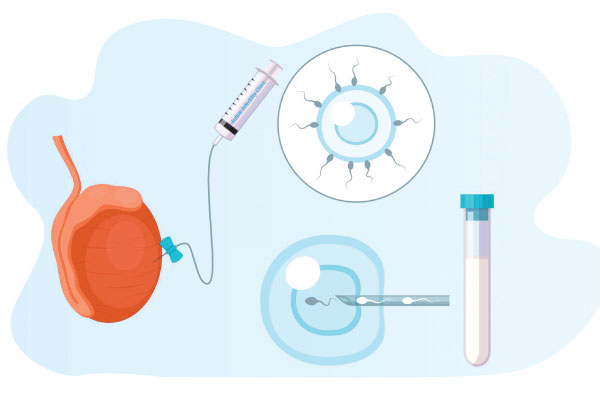
What Is TESA (Testicular Sperm Aspiration)?
Testicular Sperm Aspiration (TESA) is a minor surgical procedure in which sperm is obtained directly from the testicle using a fine needle. It is one of several sperm retrieval techniques developed to help men who have no sperm in their ejaculate — a condition known as azoospermia.
During TESA, a thin needle attached to a syringe is inserted into the testicle, and a small sample of testicular tissue and fluid is aspirated (drawn out). This tissue is then examined under a microscope by an embryologist to identify viable sperm cells that can be used for fertilization through Intracytoplasmic Sperm Injection (ICSI).
TESA is considered a minimally invasive approach compared to open surgical biopsy. It is typically performed as an outpatient procedure under local anesthesia or light sedation, and most men can return to normal activities within one to two days.
The procedure was developed in the 1990s alongside advances in ICSI technology, which made it possible to achieve fertilization with even a very small number of sperm. Before these techniques existed, men with azoospermia had extremely limited options for biological parenthood.
Why Is TESA Done?
TESA is performed when sperm cannot be found in the ejaculate but may still be produced within the testicles. The most common reasons include:
- Obstructive azoospermia — The testicles produce sperm normally, but a blockage in the reproductive tract prevents sperm from reaching the ejaculate. This can be caused by prior vasectomy, congenital absence of the vas deferens (often associated with cystic fibrosis gene mutations), infections, or previous surgeries.
- Failed vasectomy reversal — When a vasectomy reversal has been attempted but was unsuccessful, or when a man prefers sperm retrieval over reversal surgery.
- Ejaculatory dysfunction — Conditions such as retrograde ejaculation (where semen goes into the bladder instead of out through the urethra) or anejaculation (inability to ejaculate) caused by spinal cord injury, diabetes, medications, or nerve damage from surgery.
- Non-obstructive azoospermia (selected cases) — In some men, the testicles produce very small amounts of sperm that do not reach the ejaculate. TESA may be attempted in milder cases, although micro-TESE is generally preferred for non-obstructive azoospermia.
- Congenital bilateral absence of the vas deferens (CBAVD) — A condition where the tubes that carry sperm from the testicles are missing from birth, making natural conception impossible.
Your fertility specialist will recommend TESA based on a thorough evaluation that includes semen analysis, hormone testing (FSH, LH, testosterone), physical examination, and sometimes genetic testing to determine the cause of azoospermia and the most appropriate sperm retrieval method.
How Is TESA Performed?
TESA is a relatively quick and straightforward procedure, typically completed in 15 to 30 minutes. Here is what happens step by step:
Step 1: Pre-Procedure Evaluation
Before the procedure, your doctor will perform a comprehensive assessment:
- A detailed medical history review, including any prior surgeries, infections, or genetic conditions.
- Physical examination of the testicles to assess size, consistency, and the presence of the vas deferens.
- Blood tests including hormone levels (FSH, LH, testosterone, prolactin) to help distinguish between obstructive and non-obstructive causes.
- Genetic testing (karyotype, Y-chromosome microdeletion analysis) may be recommended, especially if non-obstructive azoospermia is suspected.
- You will be advised to avoid blood-thinning medications (such as aspirin or ibuprofen) for several days before the procedure.
Step 2: Anesthesia
TESA is typically performed under local anesthesia, though sedation options are available:
- Local anesthesia is injected into the skin and tissues of the scrotum to numb the area. This is the most common approach.
- A spermatic cord block may also be used, which numbs the entire testicle by anesthetizing the nerves in the spermatic cord.
- Intravenous (IV) sedation or general anesthesia may be offered if you are anxious or if the procedure is being performed alongside your partner's egg retrieval.
- You will be awake during the procedure if only local anesthesia is used, but you should not feel pain — only mild pressure or a pulling sensation.
Step 3: Needle Aspiration
The core of the TESA procedure involves aspirating tissue from the testicle:
- The scrotal skin is cleaned with an antiseptic solution and draped in a sterile manner.
- The surgeon stabilizes the testicle with one hand and inserts a fine needle (typically 18- to 21-gauge) attached to a syringe into the testicular tissue.
- Gentle negative pressure (suction) is applied with the syringe while the needle is moved within the testicle to collect small samples of testicular tissue and fluid.
- The aspirated material is immediately handed to the embryologist, who examines it under a microscope to check for the presence of sperm.
- If sperm is found in adequate numbers, the procedure is complete. If not, additional aspirations may be performed from different areas of the same testicle or the other testicle.
Step 4: Laboratory Processing
Once tissue is collected, the embryology team processes the sample:
- The testicular tissue is carefully dissected and processed in the laboratory to separate sperm cells from the surrounding tissue.
- The embryologist identifies and selects viable, motile sperm under high-power magnification.
- Retrieved sperm can be used fresh for ICSI on the same day (if coordinated with the partner's egg retrieval) or cryopreserved (frozen) for future use.
- Even immotile but viable sperm from testicular tissue can be successfully used for ICSI fertilization.
Step 5: Wound Care
After aspiration, minimal wound care is required:
- The needle puncture site is very small and usually does not require stitches.
- A small dressing or bandage is applied to the puncture site.
- You will be monitored briefly in the recovery area before being discharged.
- The entire visit typically takes about one to two hours including preparation and recovery time.
What to Expect After TESA
Recovery from TESA is generally quick because it is a minimally invasive procedure. Here is what you can expect in the days following:
- Mild to moderate discomfort or soreness in the scrotum for two to three days, manageable with over-the-counter pain medication such as acetaminophen (paracetamol).
- Minor swelling or bruising at the puncture site, which typically resolves within a few days.
- Wearing supportive underwear (briefs or a scrotal support) for 48 to 72 hours to reduce swelling and provide comfort.
- Applying ice packs wrapped in a cloth to the area for 15 to 20 minutes at a time during the first 24 hours to minimize swelling.
- Avoiding heavy lifting, strenuous exercise, and sexual activity for five to seven days after the procedure.
- Most men can return to desk work or light activities within one to two days.
Your doctor will schedule a follow-up appointment to check on your recovery and discuss the results of the sperm retrieval. If sperm was successfully retrieved and frozen, your team will coordinate the timing of the ICSI cycle with your partner's treatment plan.
How Successful Is TESA?
The success of TESA depends primarily on the underlying cause of azoospermia. Sperm retrieval rates vary significantly between obstructive and non-obstructive cases:
- Obstructive azoospermia — Sperm retrieval rates with TESA are very high, typically ranging from 80% to nearly 100%. Because the testicles are producing sperm normally, the procedure almost always yields usable sperm.
- Non-obstructive azoospermia — Retrieval rates are lower, generally between 30% and 50% with TESA. Micro-TESE is often preferred for these cases as it offers higher retrieval rates (40-60%).
- Overall clinical pregnancy rates when TESA-retrieved sperm is used with ICSI range from 25% to 45% per cycle, depending on the female partner's age, egg quality, and other fertility factors.
- Fertilization rates with ICSI using testicular sperm are comparable to those achieved with ejaculated sperm, typically around 50% to 70% per injected egg.
- The female partner's age is one of the most significant factors affecting overall pregnancy success — women under 35 generally have the highest success rates.
At Fishtail IVF, our team works collaboratively — urologists, reproductive endocrinologists, and embryologists — to optimize sperm retrieval and ICSI outcomes. We will provide you with an individualized assessment of your expected success rates based on your specific diagnosis and circumstances.
What Are the Risks of TESA?
TESA is considered a safe procedure with a low complication rate. However, as with any medical procedure, there are some potential risks:
- Pain or discomfort — Mild scrotal pain is common for a few days but is usually well-controlled with oral pain medication. Severe or persistent pain is uncommon.
- Bleeding or hematoma — A small collection of blood (hematoma) can form in the scrotum. Minor bleeding usually resolves on its own; large hematomas are rare but may require drainage.
- Infection — The risk of infection at the needle site is very low, especially with proper sterile technique. Signs to watch for include increasing redness, warmth, swelling, or fever.
- Swelling — Temporary scrotal swelling is expected and typically resolves within a few days. Persistent or worsening swelling should be reported to your doctor.
- Testicular damage — There is a small theoretical risk of damage to blood vessels within the testicle, which could affect blood supply. This is extremely rare with needle aspiration techniques.
- Failure to retrieve sperm — In some cases, particularly with non-obstructive azoospermia, the procedure may not yield any viable sperm. Your doctor will discuss alternative options if this occurs.
- Need for repeat procedure — If insufficient sperm is obtained or if sperm is needed for a future cycle and none was frozen, a repeat TESA may be necessary.
Serious complications from TESA are uncommon. Most men experience only mild discomfort that resolves within a few days. Your surgeon at Fishtail IVF will take every precaution to minimize risks and will discuss all potential complications with you before the procedure.
TESA vs. PESA vs. Micro-TESE: Understanding the Differences
There are several sperm retrieval techniques available, and the best choice depends on the cause of azoospermia, the likelihood of finding sperm, and your doctor's expertise. Here is how the three most common methods compare:
TESA (Testicular Sperm Aspiration)
- Sperm is aspirated directly from the testicular tissue using a needle and syringe.
- Performed under local anesthesia as an outpatient procedure.
- Best suited for obstructive azoospermia where the testicles are producing sperm normally.
- Minimally invasive with quick recovery (one to two days).
- Retrieval rates are high for obstructive cases (80-100%) but lower for non-obstructive cases (30-50%).
PESA (Percutaneous Epididymal Sperm Aspiration)
- Sperm is aspirated from the epididymis (the coiled tube that sits on top of each testicle where sperm mature and are stored).
- Also performed under local anesthesia with a fine needle.
- Best suited for obstructive azoospermia, particularly when the obstruction is beyond the epididymis.
- Less invasive than TESA since the testicle itself is not punctured.
- Retrieval rates are high for obstructive cases but PESA is not useful in non-obstructive azoospermia, since sperm may never reach the epididymis.
- May yield more mature, motile sperm compared to testicular sperm since epididymal sperm have undergone further maturation.
Micro-TESE (Microsurgical Testicular Sperm Extraction)
- An open surgical procedure where the testicle is opened and examined under a high-powered operating microscope.
- The surgeon identifies and selects the most promising seminiferous tubules (sperm-producing tubes) that are more likely to contain sperm.
- Requires general or regional anesthesia and is performed in an operating room.
- The gold standard for non-obstructive azoospermia, offering the highest sperm retrieval rates (40-60%) in these difficult cases.
- More invasive with a longer recovery period (five to seven days of restricted activity).
- Removes less testicular tissue overall compared to conventional TESE because of the targeted, microscope-guided approach.
How Your Doctor Chooses
Your fertility specialist will recommend the most appropriate technique based on your diagnosis:
- For obstructive azoospermia — PESA or TESA is usually the first choice due to high success rates and minimal invasiveness.
- For non-obstructive azoospermia — Micro-TESE is generally preferred because it offers the best chance of finding sperm in a testicle with impaired sperm production.
- For diagnostic purposes — TESA may be used initially to confirm whether sperm production is occurring before planning a more involved procedure.
- Availability and expertise — The choice may also depend on the surgical expertise and equipment available at your fertility center.
Who Is a Candidate for TESA?
TESA may be recommended for you if you meet one or more of the following criteria:
- You have been diagnosed with azoospermia (no sperm in the ejaculate) confirmed by at least two separate semen analyses.
- You have obstructive azoospermia due to vasectomy, congenital absence of the vas deferens, prior infection, or previous surgery.
- You have had an unsuccessful vasectomy reversal and wish to pursue biological parenthood.
- You have ejaculatory dysfunction (retrograde ejaculation or anejaculation) and other methods of sperm collection have been unsuccessful.
- You prefer sperm retrieval over vasectomy reversal surgery due to lower cost, shorter recovery, or higher success rates when combined with IVF-ICSI.
- You and your partner are planning an IVF-ICSI cycle and need surgically retrieved sperm.
- You have non-obstructive azoospermia with favorable prognostic indicators (normal testicular volume, mildly elevated FSH), though micro-TESE may be recommended instead.
Not every man with azoospermia is a candidate for TESA. Men with very small testicles, significantly elevated FSH levels, or known genetic causes of complete spermatogenic failure (such as complete AZFa or AZFb Y-chromosome microdeletions) may be better served by micro-TESE or may need to consider alternative options such as donor sperm. A thorough evaluation at Fishtail IVF will help determine the best path forward for you.
When Should You Contact Your Healthcare Provider?
After a TESA procedure, contact your healthcare provider or seek medical attention if you experience any of the following:
- Severe or worsening scrotal pain that is not relieved by prescribed pain medication.
- Significant swelling of the scrotum that continues to increase after the first 24 hours.
- Fever over 100.4 degrees Fahrenheit (38 degrees Celsius), which may indicate infection.
- Redness, warmth, or discharge from the needle puncture site.
- Heavy or persistent bleeding from the site that does not stop with gentle pressure.
- Nausea or vomiting that persists beyond the first few hours after the procedure.
- Difficulty urinating or blood in the urine.
- Any symptoms that concern you — it is always better to call and ask than to wait.
A Note from Fishtail IVF
A diagnosis of azoospermia can feel overwhelming, but it does not mean that biological fatherhood is out of reach. TESA and other sperm retrieval techniques have made it possible for many men with no sperm in their ejaculate to father their own biological children — something that was not possible just a few decades ago.
At Fishtail IVF, we understand that male infertility is a deeply personal matter, and we approach every case with sensitivity, expertise, and respect. Our team of experienced urologists and fertility specialists will work closely with you to determine the most appropriate sperm retrieval method for your situation and coordinate seamlessly with our IVF laboratory to give you the best possible chance of success.
If you or your partner have been diagnosed with azoospermia or are struggling with male factor infertility, we encourage you to schedule a consultation with our team. Together, we will explore every option available to help you achieve your dream of becoming a parent.