What Is ICSI (Intracytoplasmic Sperm Injection)?
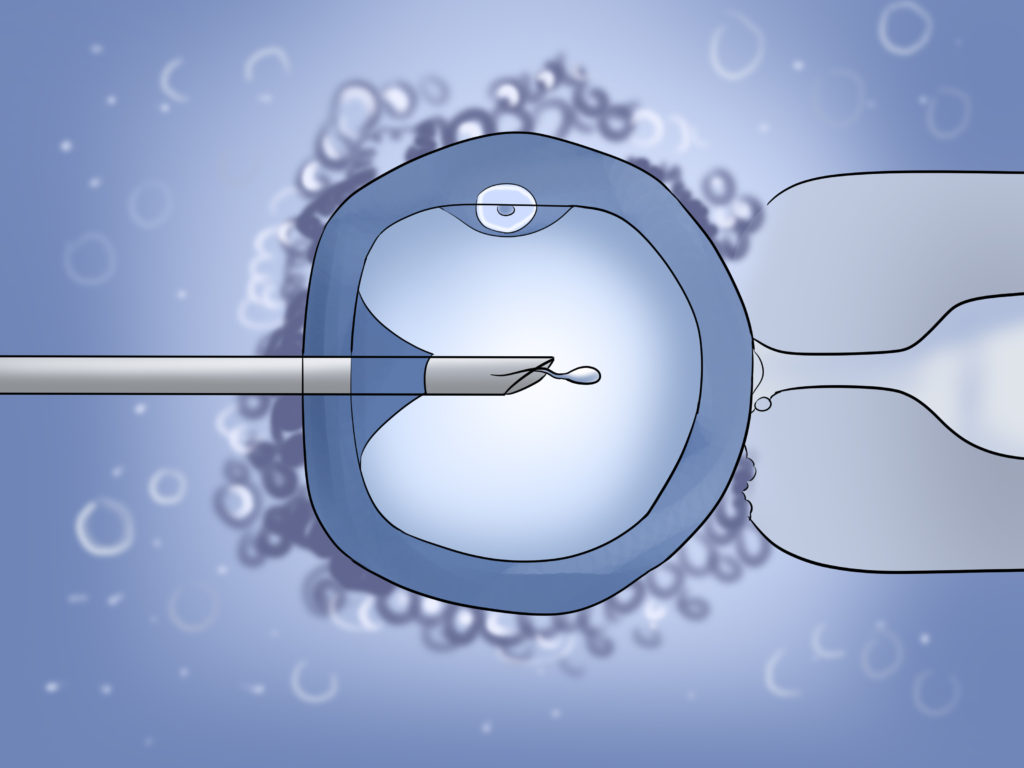
Intracytoplasmic sperm injection (ICSI) is a specialized form of in vitro fertilization (IVF) used primarily for severe cases of male factor infertility. During ICSI, a single sperm is picked up with a fine glass needle and injected directly into the center (cytoplasm) of a mature egg.
ICSI was developed in the early 1990s and has since revolutionized the treatment of male infertility. Before ICSI, men with very low sperm counts, poor sperm motility, or abnormal sperm shape had very limited treatment options. ICSI bypasses many of the barriers to fertilization by placing the sperm directly inside the egg.
ICSI is performed as part of an IVF cycle. The steps for ovarian stimulation, egg retrieval, and embryo transfer are the same as in conventional IVF — the key difference is how the eggs are fertilized in the laboratory.
Why Is ICSI Done?
ICSI is typically recommended when there is a concern that fertilization may not occur with conventional IVF. Common reasons include:
- Very low sperm count (oligozoospermia) — When there are too few sperm available for conventional IVF insemination.
- Poor sperm motility (asthenozoospermia) — When sperm can't swim well enough to reach and penetrate the egg on their own.
- Abnormal sperm shape (teratozoospermia) — When a high percentage of sperm have abnormal morphology, reducing their ability to fertilize.
- Surgically retrieved sperm — When sperm is obtained through TESA, PESA, or micro-TESE procedures due to obstructive or non-obstructive azoospermia (absence of sperm in the ejaculate).
- Previous IVF fertilization failure — When eggs failed to fertilize or had low fertilization rates with conventional IVF.
- Using frozen sperm — Thawed sperm may have reduced motility, making ICSI beneficial to ensure fertilization.
- Using frozen eggs — Frozen/thawed eggs can have a hardened outer layer (zona pellucida) that makes natural sperm penetration difficult.
- Preimplantation genetic testing (PGT) — ICSI is often used when PGT is planned, as it avoids contamination from extra sperm attached to the egg's surface.
- Unexplained infertility — In some cases, ICSI may be recommended even when semen analysis is normal, particularly after unexplained IVF failure.
How Is ICSI Performed?
ICSI is performed in the IVF laboratory by a highly skilled embryologist using specialized micromanipulation equipment. Here's what happens step by step:
Step 1: Ovarian Stimulation & Egg Retrieval
The initial steps are identical to conventional IVF:
- You'll take fertility medications for 10 to 14 days to stimulate your ovaries to produce multiple eggs.
- Your response is monitored with ultrasounds and blood tests.
- When the follicles are mature, a trigger shot is given, and egg retrieval is performed 34 to 36 hours later under sedation.
Step 2: Egg Preparation
After retrieval, the eggs are prepared for ICSI:
- The surrounding cumulus cells are carefully removed from each egg using an enzyme solution and fine pipettes.
- The embryologist assesses each egg to determine its maturity. Only mature eggs (metaphase II) can be injected.
- Immature eggs cannot undergo ICSI and are set aside or cultured to see if they mature.
Step 3: Sperm Selection
A single healthy-looking sperm is carefully selected for each egg:
- The semen sample is washed and prepared to isolate motile, healthy sperm.
- If sperm was surgically retrieved (TESA/PESA), it is processed to identify viable sperm.
- The embryologist selects the best-looking, most normally moving sperm under high magnification.
- In some clinics, advanced techniques like IMSI (intracytoplasmic morphologically selected sperm injection) use even higher magnification for sperm selection.
Step 4: Sperm Injection
This is the core of the ICSI procedure:
- The mature egg is held in place using a specialized holding pipette under a powerful microscope.
- A single sperm is immobilized by touching its tail with the injection needle.
- The needle is carefully inserted through the egg's outer shell (zona pellucida) and cell membrane into the cytoplasm.
- The sperm is deposited inside the egg, and the needle is gently withdrawn.
- The entire injection process takes only a few minutes per egg.
Step 5: Fertilization Check & Embryo Culture
After injection, the eggs are monitored for signs of fertilization:
- The injected eggs are placed in an incubator overnight.
- The next morning (16 to 18 hours later), the embryologist checks for signs of normal fertilization — the presence of two pronuclei (one from the egg and one from the sperm).
- Normally fertilized embryos are cultured for 3 to 5 days before transfer or freezing.
- Day 5 or 6 embryos (blastocysts) are generally preferred for transfer as they have higher implantation potential.
Step 6: Embryo Transfer
The best-quality embryo(s) are selected for transfer, just as in conventional IVF:
- A thin catheter is used to place the embryo into the uterus under ultrasound guidance.
- The procedure is painless and takes about 5 to 10 minutes.
- Remaining good-quality embryos can be frozen for future use.
What to Expect After ICSI
Since ICSI is part of an IVF cycle, what you experience after the procedure is the same as after any IVF embryo transfer:
- Mild cramping or bloating for a day or two after egg retrieval
- Light spotting after the embryo transfer
- Breast tenderness from progesterone supplementation
- You can return to normal activities within a day or two after retrieval, and immediately after embryo transfer
You'll continue progesterone support after the transfer. A blood pregnancy test is done about 10 to 14 days after the embryo transfer to determine if the procedure was successful.
How Successful Is ICSI?
ICSI has high fertilization rates and has transformed the treatment of male factor infertility:
- Fertilization rate — ICSI successfully fertilizes 70% to 85% of injected mature eggs.
- Pregnancy rates — Once fertilization occurs, pregnancy rates with ICSI-IVF are similar to conventional IVF, ranging from 40% to 50% per cycle depending on age and other factors.
- Under 35 years old — approximately 50-60% pregnancy rate per cycle
- 35 to 37 years old — approximately 40-50% per cycle
- 38 to 40 years old — approximately 30-40% per cycle
- Over 40 years old — approximately 15-25% per cycle
Success rates depend on multiple factors including the age of the person providing eggs, egg quality, sperm source, embryo quality, and uterine health. At Fishtail IVF, our experienced embryologists achieve consistently high fertilization rates with ICSI.
What Are the Risks of ICSI?
ICSI carries the same general risks as IVF, plus a few specific to the ICSI technique:
- Egg damage — A small percentage of eggs (about 5-10%) may be damaged during the injection process and will not be usable.
- Abnormal fertilization — In rare cases, the egg may fertilize abnormally (e.g., with too many or too few pronuclei). These embryos are not used for transfer.
- OHSS (ovarian hyperstimulation syndrome) — This is a risk related to the ovarian stimulation phase, not the ICSI procedure itself.
- Multiple pregnancy — If more than one embryo is transferred, there's a risk of twins or multiples.
- Birth defect risk — Large studies show the risk of birth defects with ICSI is very similar to conventional IVF and only slightly higher than natural conception. Much of this increased risk is related to the underlying infertility rather than the ICSI technique.
- Miscarriage — The risk is similar to IVF and natural conception.
ICSI vs. Conventional IVF
The main difference between ICSI and conventional IVF lies in how fertilization is achieved:
- In conventional IVF, thousands of sperm are placed in a dish with the egg and fertilization happens naturally. In ICSI, a single sperm is injected directly into the egg.
- ICSI is necessary when sperm count or quality is very low. Conventional IVF works well when sperm parameters are normal or only mildly reduced.
- ICSI has a higher fertilization rate per egg (70-85%) compared to conventional IVF (60-70%), especially in cases of male factor infertility.
- The cost of ICSI is slightly higher than conventional IVF due to the specialized equipment and skills required.
- Pregnancy and live birth rates are similar between ICSI and conventional IVF once fertilization is achieved.
- Some clinics use ICSI for all IVF cycles regardless of sperm quality (known as 'universal ICSI'), while others reserve it for specific indications.
Do I Need ICSI?
Your fertility specialist will recommend ICSI based on your specific situation. You may need ICSI if:
- Your partner has a very low sperm count (less than 2 million total motile sperm)
- Sperm motility is severely reduced
- A high percentage of sperm have abnormal shape
- Sperm was surgically retrieved from the testicle or epididymis
- You're using frozen eggs or frozen sperm
- Previous IVF cycles had poor or failed fertilization
- You're having preimplantation genetic testing (PGT) done on your embryos
If semen analysis results are normal and there are no other concerns, conventional IVF may be sufficient. Your doctor at Fishtail IVF will review all test results and discuss the best approach for your situation.
When Should I Contact My Healthcare Provider?
Contact your healthcare provider after an ICSI-IVF cycle if you experience:
- Severe abdominal pain or bloating
- Heavy vaginal bleeding
- Fever over 100.4°F (38°C)
- Nausea, vomiting, or diarrhea that doesn't improve
- Difficulty breathing or shortness of breath
- Sudden weight gain or decreased urination (signs of OHSS)
A Note from Fishtail IVF
ICSI has been one of the most significant breakthroughs in reproductive medicine, giving hope to couples who were once told they could never have biological children. At Fishtail IVF, our skilled embryologists perform ICSI with precision and care, using advanced micromanipulation equipment to maximize your chances of fertilization and pregnancy.
If you or your partner have been diagnosed with male factor infertility, don't lose hope. ICSI has helped millions of couples worldwide achieve their dream of parenthood, and our team is here to do the same for you. Schedule a consultation to learn more about how ICSI can be part of your fertility treatment plan.