What Is Sperm Freezing (Sperm Cryopreservation)?
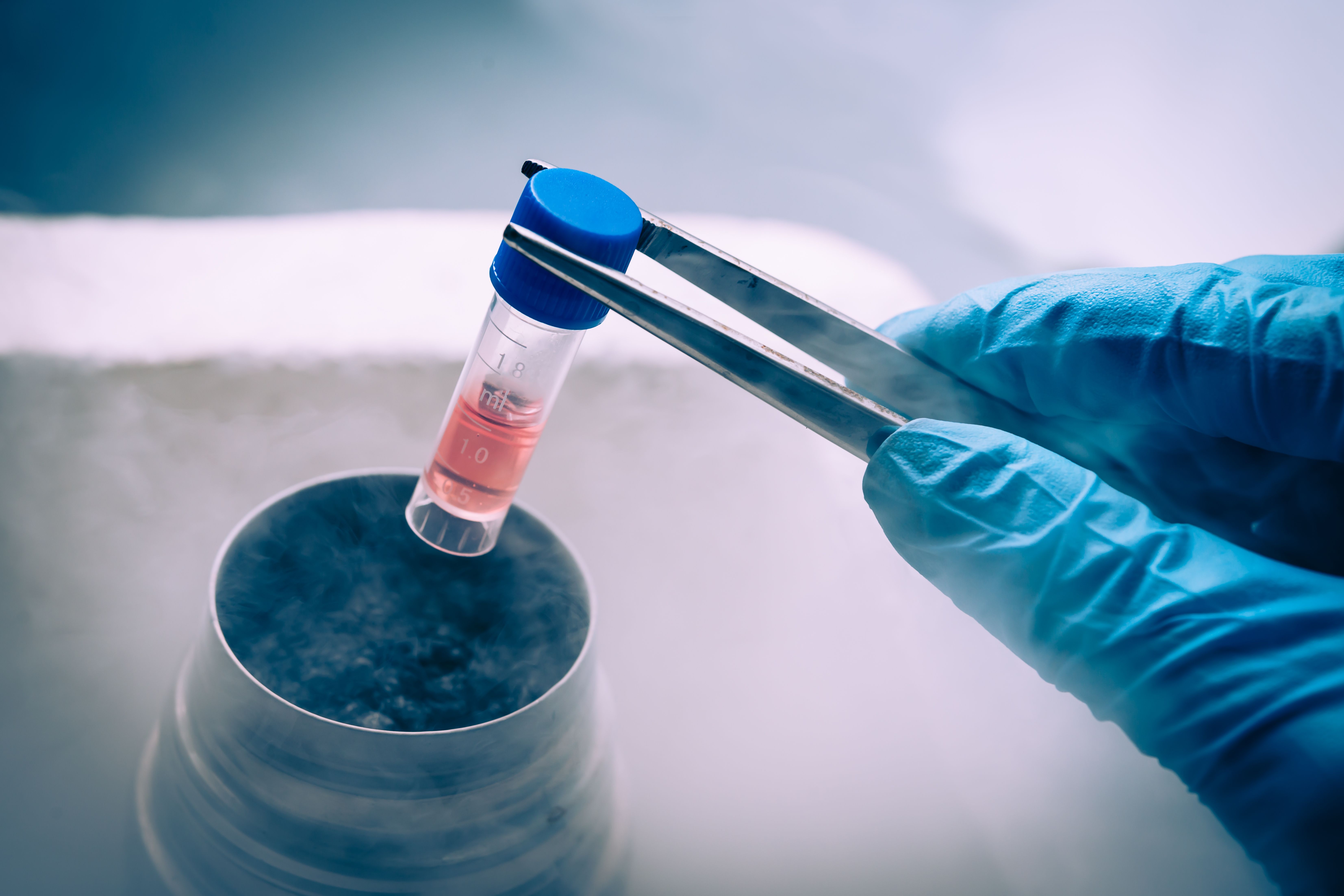
Sperm freezing, also known as sperm cryopreservation or sperm banking, is the process of collecting, analyzing, freezing, and storing a man's sperm for future use. The sperm is preserved at extremely low temperatures (–196°C / –321°F) using liquid nitrogen, effectively pausing all biological activity and allowing sperm to remain viable indefinitely.
Sperm cryopreservation has been used successfully since the 1950s and is one of the most well-established fertility preservation techniques available today. Advances in freezing methods — particularly the shift from slow freezing to vitrification (ultra-rapid freezing) — have significantly improved the survival rates of frozen sperm.
At Fishtail IVF, we offer comprehensive sperm freezing services using state-of-the-art cryopreservation technology. Whether you're planning ahead for personal reasons or need to preserve fertility before a medical treatment, our team is here to guide you through every step.
Why Is Sperm Freezing Done?
There are many reasons a person may choose to freeze their sperm. The goal is always the same — to preserve the option of biological parenthood for the future. Common reasons include:
- Cancer treatment — Chemotherapy, radiation therapy, and certain surgeries can severely damage or destroy sperm production. Freezing sperm before treatment begins ensures you have viable sperm available afterward.
- Other medical treatments — Medications for autoimmune diseases, hormone therapies, and surgeries on the reproductive organs (such as orchiectomy or vasectomy) can impair fertility.
- Gender-affirming care — Transgender women and non-binary individuals assigned male at birth may choose to freeze sperm before starting hormone therapy or undergoing surgery.
- Military deployment or high-risk occupations — Individuals in military service or occupations with exposure to hazardous chemicals, radiation, or physical danger may bank sperm as a precautionary measure.
- Advancing age — While men produce sperm throughout life, sperm quality (motility, morphology, and DNA integrity) declines with age, particularly after 40. Freezing sperm at a younger age preserves higher-quality samples.
- Delayed family planning — If you're not ready to start a family now but want to keep your options open, sperm freezing provides peace of mind.
- Assisted reproduction needs — Men who will be unavailable on the day of their partner's IVF or IUI procedure can freeze sperm in advance.
- Low sperm count or declining quality — If semen analysis shows a declining trend, freezing sooner rather than later may be advisable.
- Before a vasectomy — Some men choose to bank sperm before a vasectomy as a backup in case they change their mind about having children.
How Is Sperm Freezing Done?
Sperm freezing is a straightforward process that typically involves a few visits to the clinic. Here is what to expect at each step:
Step 1: Initial Consultation and Testing
Before freezing, you'll have an initial consultation with your fertility specialist:
- A thorough medical history review, including any medications, health conditions, or upcoming treatments that may affect fertility.
- Blood tests for infectious diseases (HIV, hepatitis B and C, syphilis, and others) are required by regulatory standards to ensure safe storage.
- A baseline semen analysis may be performed to assess sperm count, motility (movement), morphology (shape), and overall quality.
- Your doctor will discuss how many samples you should freeze based on your individual situation and goals.
Step 2: Abstinence Period
To ensure the best possible sample quality:
- You'll be asked to abstain from ejaculation for 2 to 5 days before providing your sample.
- Abstaining for too short a period may result in a lower sperm count, while abstaining for too long can reduce sperm motility.
- Your fertility team will advise you on the optimal abstinence window for your situation.
Step 3: Sperm Collection
Sperm is typically collected at the clinic in a private, comfortable room:
- Masturbation into a sterile collection cup is the most common and preferred method, as it usually yields the highest-quality sample.
- If you cannot provide a sample through masturbation, alternative collection methods are available, including the use of special non-toxic collection condoms during intercourse.
- For men with no sperm in their ejaculate (azoospermia) or those who cannot ejaculate, sperm can be surgically retrieved through procedures such as TESA (testicular sperm aspiration), PESA (percutaneous epididymal sperm aspiration), or micro-TESE (microsurgical testicular sperm extraction).
- Electroejaculation may be used for men with spinal cord injuries or certain neurological conditions.
Step 4: Semen Analysis and Processing
Once the sample is collected, it is evaluated and prepared for freezing:
- The laboratory team performs a semen analysis to assess sperm concentration, motility, morphology, and volume.
- The sample is washed and processed to remove seminal fluid and isolate healthy sperm.
- A cryoprotectant solution (a special protective medium) is added to the sperm. This solution protects sperm cells from ice crystal damage during the freezing process.
- The sample is divided into multiple vials or straws so that individual portions can be thawed for separate treatment cycles in the future.
Step 5: Freezing (Cryopreservation)
The prepared sperm samples are frozen using controlled methods:
- Slow freezing involves gradually lowering the temperature over a period of 2 to 4 hours before the samples are plunged into liquid nitrogen.
- Vitrification (rapid freezing) is a newer technique that uses ultra-fast cooling to minimize ice crystal formation and can improve post-thaw survival rates.
- Once frozen, the samples are stored in liquid nitrogen tanks at –196°C (–321°F), where all biological activity is effectively suspended.
Step 6: Storage
Frozen sperm samples are stored securely in a cryostorage facility:
- Each sample is carefully labeled with your identifying information and cataloged in the clinic's database.
- Storage tanks are continuously monitored with alarm systems to ensure consistent temperatures.
- Annual storage fees typically apply, and you will be contacted periodically to confirm your wishes regarding continued storage.
- At Fishtail IVF, your samples are stored in our secure, state-of-the-art cryostorage facility with 24/7 monitoring.
What to Expect After Sperm Freezing
Sperm freezing is a non-invasive process with virtually no physical side effects for most men:
- You can return to your normal activities immediately after providing your sample — there is no downtime or recovery period.
- If sperm was surgically retrieved, you may experience mild soreness, swelling, or bruising in the testicular area for a few days. Over-the-counter pain relief and ice packs are usually sufficient.
- Multiple samples are often recommended. Your doctor may ask you to provide 2 to 3 samples, each collected a few days apart, to ensure an adequate supply for future use.
- Freezing sperm does not reduce your current fertility or affect your ability to conceive naturally.
Once your samples are safely stored, you can proceed with any upcoming medical treatments, life changes, or family planning decisions with the confidence that your fertility is preserved. Your fertility specialist at Fishtail IVF will keep you informed about your stored samples and help you plan for when you're ready to use them.
How Successful Is Sperm Freezing?
Sperm freezing is a highly reliable fertility preservation method. Here's what the evidence shows:
- Post-thaw survival — Approximately 50% to 75% of frozen sperm survive the thawing process. Survival rates vary depending on the initial sample quality and the freezing technique used.
- Sperm frozen through vitrification tend to have higher post-thaw survival and motility compared to slow-frozen samples.
- Pregnancy rates using frozen-thawed sperm are comparable to those using fresh sperm when used with assisted reproduction techniques such as IVF with ICSI.
- IUI (intrauterine insemination) with frozen sperm has pregnancy rates of approximately 10% to 20% per cycle, similar to IUI with fresh sperm.
- IVF/ICSI with frozen sperm achieves fertilization rates of 70% to 85%, virtually identical to IVF/ICSI with fresh sperm.
- The quality of the sperm sample before freezing is the single most important factor in predicting success after thawing.
At Fishtail IVF, we use advanced cryopreservation techniques to maximize sperm survival and future usability. Our laboratory team carefully evaluates every sample to ensure the best possible outcomes when you're ready to use your stored sperm.
What Are the Risks of Sperm Freezing?
Sperm freezing is one of the safest fertility preservation procedures available. However, there are a few considerations to be aware of:
- Not all sperm survive freezing and thawing — Some sperm cells are damaged by the freezing process, which is why post-thaw survival rates range from 50% to 75%. This is accounted for by freezing multiple vials.
- Very low sperm counts may yield limited samples — Men with oligozoospermia (very low sperm count) may have few or no viable sperm to freeze. In these cases, surgical sperm retrieval or alternative strategies may be explored.
- No guarantee of future pregnancy — Frozen sperm preserves the option for biological parenthood but does not guarantee pregnancy. Success depends on many factors including the partner's fertility, the type of assisted reproduction used, and the quality of the thawed sperm.
- Sample damage or loss — While extremely rare, equipment failure, natural disasters, or human error could theoretically compromise stored samples. Reputable facilities like Fishtail IVF use redundant safety systems and continuous monitoring to minimize this risk.
- Emotional and financial considerations — Ongoing annual storage fees can add up over time, and some individuals find the decision-making around stored samples emotionally complex, especially after life changes such as divorce or the death of the depositor.
- Surgical risks (if applicable) — If sperm is obtained through testicular or epididymal procedures, there are small risks of pain, bleeding, infection, or swelling at the surgical site.
Who Should Consider Sperm Freezing?
Sperm freezing may be right for you if any of the following apply to your situation:
- You have been diagnosed with cancer or another condition requiring chemotherapy, radiation, or surgery that may affect fertility.
- You are about to begin gender-affirming hormone therapy or surgery.
- You are planning a vasectomy but want to keep your future options open.
- You work in a high-risk occupation with exposure to toxins, chemicals, radiation, or physical danger.
- You are in the military and facing deployment.
- You are over 35 and want to preserve higher-quality sperm for future use.
- You have a condition that may cause progressive decline in sperm quality, such as certain genetic conditions or autoimmune disorders.
- You or your partner are undergoing IVF and you may not be available to provide a fresh sample on the day of egg retrieval.
- You have a low or declining sperm count and want to bank samples while they are still available.
- You simply want the security and flexibility of having preserved fertility for the future.
If you're unsure whether sperm freezing is appropriate for you, the fertility specialists at Fishtail IVF are happy to discuss your personal circumstances and help you make an informed decision.
How Long Can Sperm Stay Frozen?
One of the greatest advantages of sperm cryopreservation is that frozen sperm can be stored for a very long time without significant loss of quality:
- There is no known time limit for how long sperm can remain frozen and still be viable. Sperm stored in liquid nitrogen at –196°C is in a state of biological suspension — no cellular activity, aging, or degradation occurs.
- Healthy babies have been born from sperm frozen for over 20 years, and some successful pregnancies have been reported using sperm stored for more than 40 years.
- Studies comparing sperm frozen for short periods versus long periods have found no significant difference in post-thaw motility, fertilization rates, or pregnancy outcomes.
- The key factor is not how long the sperm is stored, but how well it was frozen, the quality of the cryoprotectant used, and the stability of storage conditions over time.
- At Fishtail IVF, our cryostorage facility maintains strict temperature control and continuous monitoring to ensure the long-term integrity of your samples.
You will be asked to renew your storage consent periodically and keep the clinic updated with your current contact information. If you decide you no longer wish to keep your samples, you can choose to have them discarded, donated for research (where permitted), or donated to another individual or couple.
When Should I Contact My Healthcare Provider?
In most cases, sperm freezing is a simple process with no complications. However, you should contact your healthcare provider if:
- You have difficulty producing a sample through standard collection methods — alternative approaches can be arranged.
- You experience significant pain, swelling, fever, or signs of infection after a surgical sperm retrieval procedure.
- Your semen analysis results show very low or no sperm, and you need to discuss alternative options such as surgical retrieval or donor sperm.
- You are about to start cancer treatment or another fertility-threatening therapy and need to freeze sperm urgently — time-sensitive freezing can often be arranged within 24 to 48 hours.
- You have questions about your stored samples, storage renewal, or when and how to use your frozen sperm in the future.
- You experience emotional distress related to fertility preservation decisions — our team can connect you with counseling and support resources.
A Note from Fishtail IVF
Sperm freezing is one of the simplest yet most impactful steps you can take to protect your future fertility. Whether you're facing a medical challenge, planning ahead, or simply want the peace of mind that comes with having options, cryopreservation gives you control over your reproductive future.
At Fishtail IVF, we understand that the decision to freeze sperm can come at a difficult or uncertain time in your life. Our team is committed to making the process as smooth, private, and stress-free as possible. From your first consultation to long-term storage, we're here to support you every step of the way.
If you're considering sperm freezing — or if you've been advised to preserve your fertility before a medical treatment — don't wait. Schedule a consultation with our fertility specialists today. The sooner you act, the more options you'll have for the future.