What Is Egg Freezing (Oocyte Cryopreservation)?
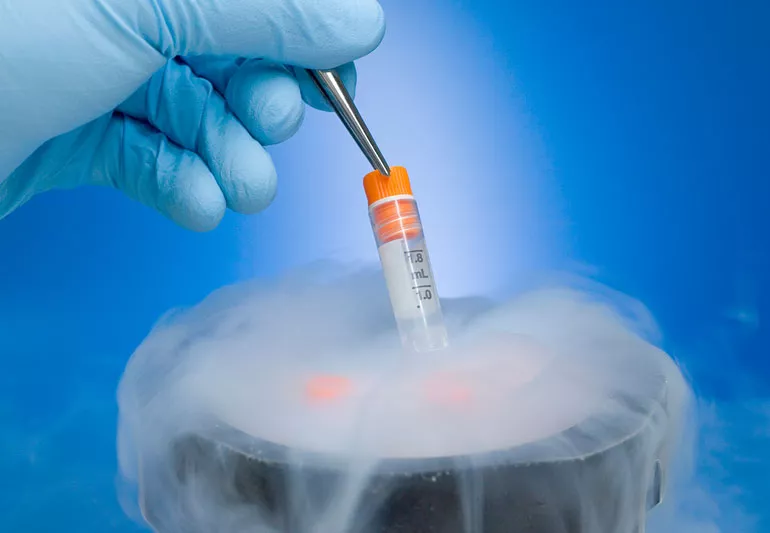
Egg freezing, medically known as oocyte cryopreservation, is a fertility preservation technique in which a woman's eggs (oocytes) are retrieved from her ovaries, frozen using a rapid-freezing process called vitrification, and stored for future use. When she is ready to conceive, the eggs are thawed, fertilized with sperm through intracytoplasmic sperm injection (ICSI), and the resulting embryos are transferred to her uterus.
Egg freezing was originally developed for women facing medical treatments that could harm their fertility, such as chemotherapy or radiation. Today, it is increasingly used by women who wish to preserve their fertility for personal, professional, or social reasons. The technique gives women greater control over their reproductive timeline.
Thanks to advances in vitrification technology, egg survival rates after thawing have improved dramatically, with modern survival rates exceeding 90%. Egg freezing is no longer considered experimental and is recognized as an established fertility preservation option by the American Society for Reproductive Medicine (ASRM).
Why Is Egg Freezing Done?
There are many medical and personal reasons why women choose to freeze their eggs. Your healthcare provider may recommend egg freezing in the following situations:
- Cancer treatment — Chemotherapy, radiation therapy, and certain surgeries can damage or destroy eggs. Freezing eggs before treatment begins preserves the chance of having biological children afterward.
- Other medical conditions — Autoimmune diseases such as lupus, genetic conditions like Turner syndrome mosaicism, or conditions requiring ovarian surgery (such as severe endometriosis) may threaten future fertility.
- Gender-affirming treatment — Transgender men or nonbinary individuals may choose to freeze eggs before starting hormone therapy or undergoing surgery.
- Elective or social egg freezing — Many women freeze their eggs because they haven't found the right partner, want to focus on career or education, or simply aren't ready to start a family yet but want to preserve their options.
- Family history of early menopause — If your mother or sisters experienced premature ovarian insufficiency or early menopause, egg freezing can be a proactive step.
- IVF cycle considerations — During an IVF cycle, if no sperm is available on the day of egg retrieval (e.g., partner unavailable, using donor sperm that hasn't arrived), eggs may be frozen for later fertilization.
- Ovarian hyperstimulation syndrome (OHSS) risk — In some IVF cycles, if there is a high risk of OHSS, eggs may be frozen rather than fertilized immediately to allow the body time to recover.
- Military deployment or high-risk occupations — Women in active military service or other high-risk careers may choose egg freezing as a precaution.
What Are the Steps of Egg Freezing?
The egg freezing process is similar to the first half of an IVF cycle. It typically takes about two to three weeks from the start of medication to egg retrieval. Here are the steps involved:
Step 1: Initial Consultation and Testing
Before starting the egg freezing process, your fertility specialist will conduct a thorough evaluation to assess your ovarian reserve and overall reproductive health.
- Blood tests — Anti-Mullerian hormone (AMH) level to estimate egg supply, follicle-stimulating hormone (FSH) and estradiol levels on day 2 or 3 of your menstrual cycle, and a complete hormonal panel.
- Transvaginal ultrasound — An antral follicle count (AFC) is done to count the small resting follicles in your ovaries, which helps predict how many eggs you may produce.
- Infectious disease screening — Blood tests for HIV, hepatitis B and C, and other infections are required before the procedure.
- Medical history review — Discussion of your medical history, family history, reasons for freezing, and realistic expectations about outcomes.
Step 2: Ovarian Stimulation
Once your baseline assessment is complete, you'll begin a course of injectable hormone medications to stimulate your ovaries to produce multiple eggs instead of the single egg that normally matures each month.
- Gonadotropin injections — Medications such as follicle-stimulating hormone (FSH) and luteinizing hormone (LH) are self-administered as subcutaneous injections daily for about 10 to 14 days.
- GnRH antagonist or agonist — An additional medication is used to prevent premature ovulation so the eggs don't release before retrieval.
- Your care team will teach you how to administer the injections at home. Most women find it manageable after the first day or two.
- The goal is to stimulate the development of multiple follicles (fluid-filled sacs in the ovaries that each contain an egg).
Step 3: Monitoring During Stimulation
Throughout the stimulation phase, you will visit the clinic every two to three days for monitoring to track how your ovaries are responding to the medications.
- Transvaginal ultrasounds measure the number and size of developing follicles.
- Blood tests track estradiol, progesterone, and LH levels to guide medication dosing.
- Your doctor may adjust the medication dosage based on your response — some women respond quickly while others need more time.
- Monitoring visits typically take about 15 to 30 minutes.
Step 4: Trigger Shot
When your follicles reach the appropriate size (typically 18-22mm), you'll receive a trigger shot to finalize the maturation of the eggs and prepare them for retrieval.
- The trigger shot is usually human chorionic gonadotropin (hCG) or a GnRH agonist such as leuprolide.
- The timing of this injection is critical — it must be given at the exact time specified by your doctor, usually 36 hours before the scheduled egg retrieval.
- After the trigger shot, you will stop all other stimulation medications.
Step 5: Egg Retrieval
Egg retrieval is a minor surgical procedure performed at the clinic under sedation or light anesthesia. It typically takes about 15 to 20 minutes.
- A thin ultrasound-guided needle is passed through the vaginal wall into each ovarian follicle.
- The fluid from each follicle is aspirated (gently suctioned out), and the eggs are collected by the embryologist.
- You will be sedated during the procedure and should not feel pain, though mild cramping or pressure may occur afterward.
- The number of eggs retrieved varies, but typically ranges from 8 to 15 eggs per cycle depending on your age and ovarian reserve.
- You'll need someone to drive you home after the procedure as you will have received sedation.
Step 6: Egg Assessment and Vitrification
After retrieval, the embryology team evaluates the collected eggs and freezes the mature ones using vitrification.
- Only mature eggs (metaphase II, or MII) can be frozen. Immature eggs are not suitable for cryopreservation.
- Vitrification is an ultra-rapid freezing technique that prevents ice crystal formation, which can damage the egg's delicate structure.
- The eggs are treated with cryoprotectant solutions, then plunged into liquid nitrogen at -196 degrees Celsius.
- Frozen eggs are stored in specialized cryogenic tanks with continuous monitoring and backup systems.
- You will be informed of the number of mature eggs successfully frozen, typically within a day of the procedure.
What to Expect After Egg Retrieval
Most women recover quickly after the egg retrieval procedure. You can expect to return to normal activities within a day or two. Here are some common experiences:
- Mild to moderate cramping and bloating for a few days, similar to menstrual cramps
- Spotting or light vaginal bleeding for one to two days
- Feeling of fullness or pressure in the abdomen due to temporarily enlarged ovaries
- Fatigue or grogginess on the day of the procedure from sedation
- Breast tenderness from the hormonal stimulation
- Constipation, which is a common side effect of the medications
You should avoid strenuous exercise, heavy lifting, and sexual intercourse for about one to two weeks after retrieval. Your ovaries will still be enlarged during this time, and vigorous activity could increase the risk of ovarian torsion (twisting of the ovary). Light walking and gentle activities are encouraged.
Your period will typically arrive within one to two weeks after the retrieval. After your first normal period, your body should feel back to baseline. If you plan to do another egg freezing cycle, most doctors recommend waiting at least one full menstrual cycle before starting again.
Our team at Fishtail IVF will check in with you after the procedure and is always available to answer questions during your recovery.
What Are the Success Rates of Egg Freezing?
The success of egg freezing depends on several factors, the most important of which is the age at which the eggs are frozen. Younger eggs have a higher chance of surviving the freeze-thaw process and leading to a successful pregnancy:
- Under 30 years old — Approximately 8-10 eggs are typically needed for one pregnancy attempt, with per-egg survival rates of about 90-95%.
- 30 to 34 years old — Success rates remain strong. Approximately 10-12 eggs may be needed for a good chance at one pregnancy.
- 35 to 37 years old — Success rates begin to decline. More eggs (around 15-20) may be recommended to give a reasonable chance of pregnancy.
- 38 to 40 years old — Egg quality and quantity decrease noticeably. Multiple cycles may be needed to bank enough eggs.
- Over 40 years old — Success rates are significantly lower. Each egg has a lower probability of leading to a live birth, and considerably more eggs are needed.
It is important to understand that not every frozen egg will result in a pregnancy. As a general guide, of 10 frozen eggs from a woman under 35, approximately 7-9 will survive the thaw, 5-7 may fertilize successfully, 3-5 may develop into viable embryos, and 1-2 may lead to a pregnancy.
Freezing eggs at a younger age gives you the best chances. Most fertility specialists recommend freezing eggs before age 35 for optimal results. However, egg freezing can still be valuable for women in their late 30s, and each situation is unique.
At Fishtail IVF, we provide personalized counseling to help you understand your specific chances based on your ovarian reserve, age, and health profile. We believe in honest, transparent communication about expected outcomes.
What Are the Risks of Egg Freezing?
Egg freezing is generally considered a safe procedure, but like all medical treatments, it carries some risks. Most side effects are mild and temporary:
- Ovarian hyperstimulation syndrome (OHSS) — The stimulation medications can cause the ovaries to over-respond, leading to swollen, painful ovaries and fluid accumulation in the abdomen. Mild OHSS occurs in about 10-15% of cycles and resolves on its own. Severe OHSS is rare (less than 1-2%) but requires medical attention.
- Bloating, mood swings, and headaches — These are common side effects of the hormonal medications used during stimulation and are usually temporary.
- Infection — There is a very small risk of infection from the egg retrieval needle. This is extremely rare when proper sterile technique is used.
- Bleeding — Minor bleeding from the needle puncture site in the vaginal wall is common and usually self-limiting. Significant bleeding requiring intervention is rare.
- Ovarian torsion — In rare cases, the enlarged stimulated ovary can twist on its blood supply. This is a medical emergency requiring surgical intervention.
- Emotional and psychological effects — The process can be emotionally challenging. The financial investment, hormonal fluctuations, and uncertainty about future outcomes can cause stress and anxiety.
- No guarantee of pregnancy — It is important to understand that freezing eggs does not guarantee a future pregnancy. Eggs may not survive the thaw, may not fertilize, or may not lead to a viable embryo or pregnancy.
At Fishtail IVF, we take every precaution to minimize risks. Our experienced doctors carefully monitor your response to medications throughout the stimulation phase and adjust dosages to reduce the chance of ovarian hyperstimulation. We use the latest evidence-based protocols to keep you safe.
Who Should Consider Egg Freezing?
Egg freezing may be a good option for you if any of the following apply to your situation:
- You have been diagnosed with cancer or another condition requiring treatment that may affect fertility (chemotherapy, radiation, or pelvic surgery).
- You have a family history of premature menopause or diminished ovarian reserve.
- You have endometriosis or another condition that may progressively damage your ovaries.
- You are in your late 20s or 30s and want to preserve your fertility for personal reasons, such as not having found a partner or wanting to focus on your career or education.
- You are undergoing IVF and want to freeze unfertilized eggs rather than embryos, especially if you do not have a partner or prefer not to create embryos at this time.
- You are a transgender man or nonbinary individual planning to undergo hormone therapy or surgery.
- You work in a high-risk profession (military, first responders, etc.) and want a backup plan for future family building.
- You carry a genetic mutation (such as BRCA) that may require preventive removal of your ovaries in the future.
The ideal time to freeze your eggs is in your late 20s to early 30s, when egg quality and quantity are still strong. However, many women benefit from egg freezing in their mid to late 30s as well. A fertility evaluation can help determine whether egg freezing is appropriate for your individual circumstances.
If you are unsure whether egg freezing is right for you, the fertility specialists at Fishtail IVF are happy to provide a comprehensive assessment and discuss your options. There is no obligation — our goal is to ensure you have the information you need to make an empowered decision.
How Long Can Frozen Eggs Be Stored?
Frozen eggs can be stored indefinitely without any deterioration in quality. Once vitrified and stored in liquid nitrogen at -196 degrees Celsius, all biological activity is effectively paused. The duration of storage does not affect the viability of the eggs.
There have been successful pregnancies from eggs that were frozen for over 10 years. Whether you use your eggs one year or fifteen years after freezing, the quality of the eggs remains the same as the day they were frozen. What matters most is the age at which the eggs were retrieved, not how long they have been in storage.
At Fishtail IVF, your frozen eggs are stored in secure cryogenic tanks equipped with 24/7 temperature monitoring, alarm systems, and backup storage capabilities. We follow strict chain-of-custody protocols to ensure the safety and integrity of your specimens at all times. Annual storage fees apply, and our team will keep you informed about your storage status.
When Should I Contact My Healthcare Provider?
While mild discomfort is normal after egg retrieval, you should contact your healthcare provider right away if you experience any of the following symptoms:
- Severe or worsening abdominal pain or bloating that does not improve with over-the-counter pain medication
- Heavy vaginal bleeding (soaking through a pad in an hour)
- Fever over 100.4 degrees Fahrenheit (38 degrees Celsius)
- Difficulty urinating or a noticeable decrease in urine output
- Nausea or vomiting that prevents you from keeping fluids down
- Sudden weight gain of more than 2 pounds in a single day (a sign of fluid retention from OHSS)
- Difficulty breathing or shortness of breath
- Dizziness, fainting, or feeling lightheaded
These symptoms could indicate ovarian hyperstimulation syndrome, infection, internal bleeding, or ovarian torsion. While serious complications are uncommon, prompt medical evaluation is important. At Fishtail IVF, our team is available to address your concerns and provide guidance whenever you need it.
A Note from Fishtail IVF
Egg freezing is one of the most empowering advancements in reproductive medicine. It gives you the freedom to preserve your fertility on your own terms — whether you are facing a medical challenge or simply want more time to plan your future family.
At Fishtail IVF, we understand that the decision to freeze your eggs is both deeply personal and medically important. Our experienced team of fertility specialists, embryologists, and counselors is here to support you through every step of the process — from your initial consultation to the day you decide to use your frozen eggs.
We combine advanced vitrification technology with compassionate, individualized care to give you the best possible outcome. Whether you are preserving your fertility before medical treatment or taking a proactive step toward your future, we are honored to be part of your journey. Schedule a consultation today and let us help you take control of your reproductive future.